Name and form

The Surname Зайчик

The surname Зайчик (Zaichyk or Zaichik) belongs to a broad East Slavic naming world in which nicknames, animal names, diminutives, patronymics, occupations, places, and social labels could become hereditary surnames. Its historical forms vary by language, script, region, and record-keeping system.

Meaning of the Name

The name is built from the East Slavic word for “hare.”

The root of the surname is the East Slavic word for hare: Ukrainian заєць, Belarusian заяц, and related forms in other East Slavic usage. The form зайчик is diminutive, meaning “little hare” or “small hare.”

For short answers about spelling variants, record visibility, survivor bias, and common surname-origin mistakes, see the Zaichyk / Zaichik FAQ.

As a surname, Zaichyk should be read contextually. Animal-derived surnames often began as nicknames, descriptive bynames, household identifiers, or inherited names whose original meaning had already become conventional by the time they entered written records. A person named Zaichyk was not necessarily being described directly as “hare-like” in a literal sense; the name belongs to a broader pattern of animal and nature-based surnames.

For that reason, this page treats the surname not only as a word form, but as a documentary trail. Much of the original-source evidence for Zaichyk / Zaichik / Зайчик comes from Orthodox and Catholic church records, where the name appears in baptisms, marriages, burials, family relationships, local residence, and social-status descriptions across several historical regions.
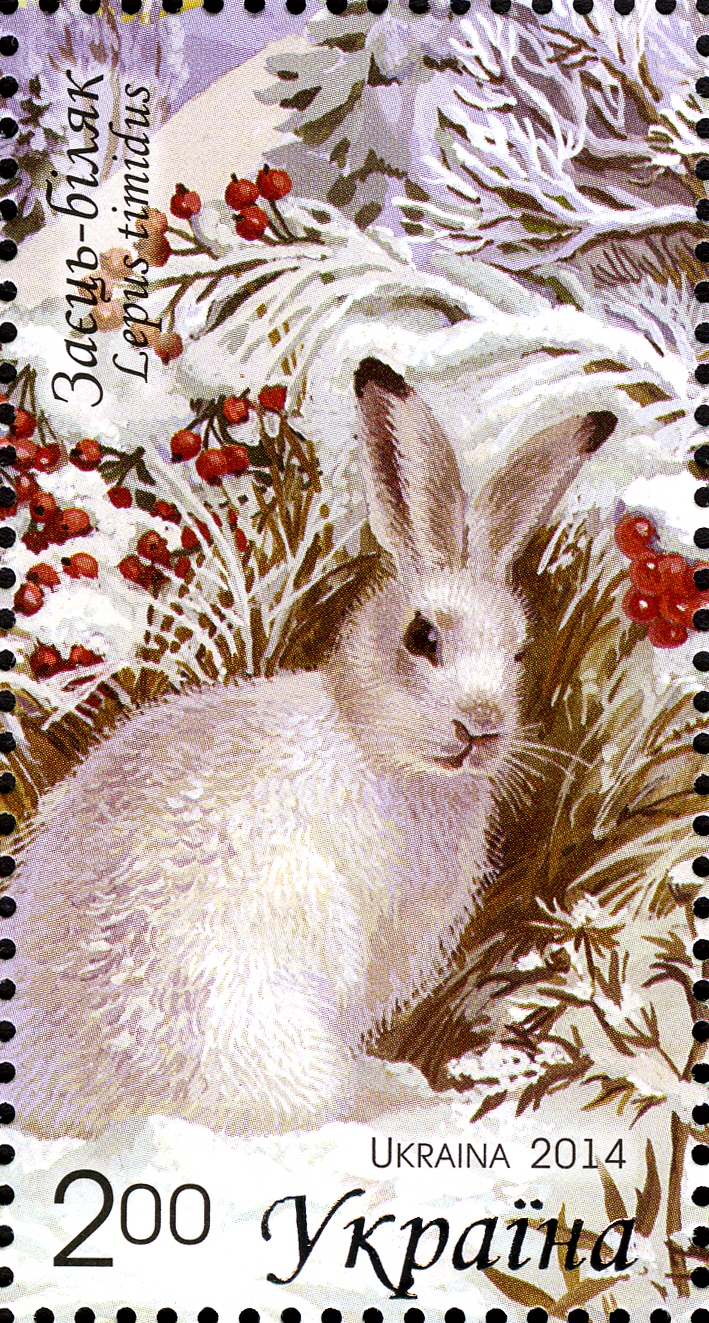
Ukrainian postage stamp showing a white hare, labeled заєць-біляк

Diminutives and Everyday Naming

The form Зайчик is not just an animal word, but a diminutive form shaped by everyday speech.

The ending in Зайчик gives the name a diminutive quality: “little hare,” “small hare,” or “hare-like one.” In East Slavic naming, diminutive forms were not limited to children or affectionate speech. They could become ordinary bynames, household identifiers, and eventually hereditary surnames. A diminutive surname does not necessarily mean that the first bearer was a child, weak, timid, or literally associated with a hare. It means the name passed through the ordinary social language of local communities.

This is important because many East Slavic surnames preserve traces of spoken naming practices rather than formal invented family names. Names could begin as familiar descriptions, nicknames, short forms, animal references, household labels, or local identifiers. Once written into parish books, municipal records, tax lists, military rolls, or legal documents, such names became part of the formal documentary world.

Animal Names in Slavic Surnames

Animal-derived surnames are a familiar part of Slavic naming traditions.

Slavic surnames frequently developed from ordinary words used as nicknames or bynames. Animals, birds, plants, physical traits, temperaments, occupations, places, and household associations all supplied material for surnames. Animal names were especially durable because they were short, vivid, and easily understood within local communities.

These names could carry many shades of meaning. Some may have begun as references to appearance, movement, temperament, skill, humor, or local association. Others may have lost any specific descriptive force long before they entered surviving written records. By the time a name appears in a parish register or civic list, it may already be a hereditary surname whose literal meaning no longer explains the person who bore it.

The surname Зайчик belongs to this broader naming world. It should be understood as an ordinary East Slavic surname formed from a familiar animal word, not as an unusual or exotic construction.

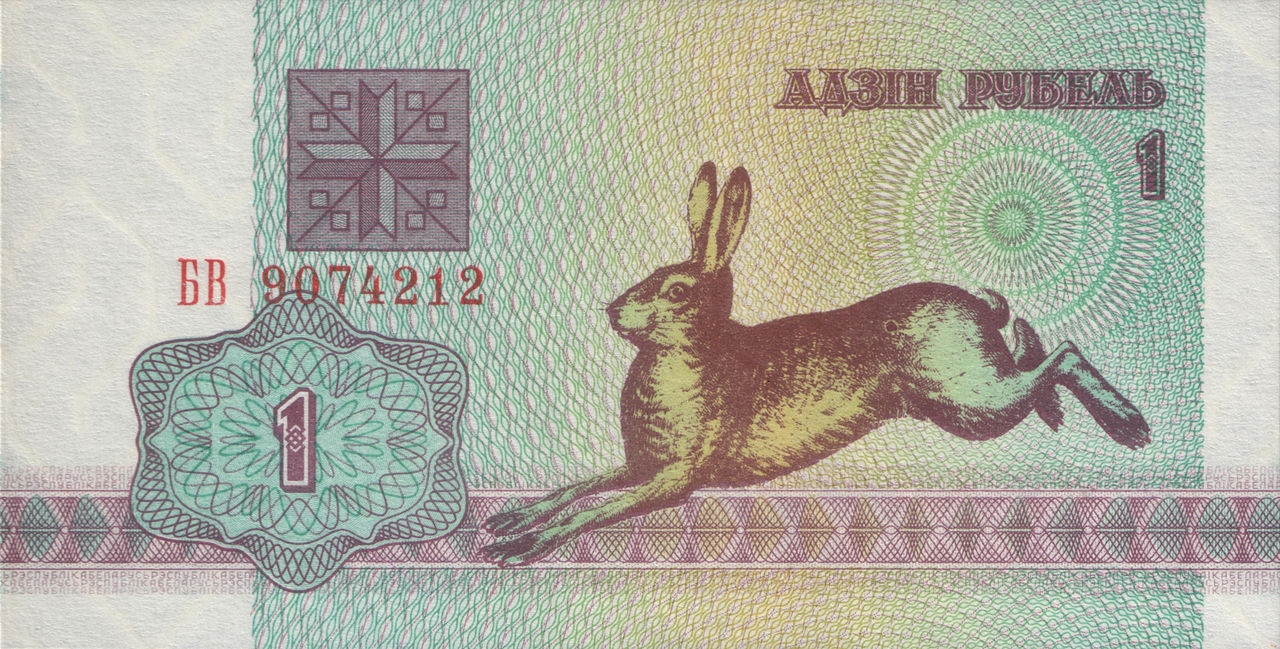
Early 1990s Belarusian one-ruble note showing a hare
Early 1990s Belarusian one-ruble note with a hare, popularly nicknamed the zaichyk. A later cultural echo of the same familiar animal word behind the surname.

Slavic Naming Conventions

Historical records often identify people through a combination of given name, patronymic, surname, status, household, or locality.

Given name

Personal Names

Parish, civic, and legal records usually begin with a given name: Matvii, Trokhym, Ioann, Hryhorii, Vasyl, Feodor, Sysoi, and others. The form of the given name often follows the language of the record.

Father’s name

Patronymics

Patronymics identify a person through the father’s name. For example, Sysoi Karpovych Zaichyk means Sysoi Zaichyk, son of Karpo. Patronymics are especially useful when reconstructing family lines.

Inherited name

Surnames

By the period covered in most records on this site, Zaichyk usually functions as an inherited family surname, though spelling and grammatical form vary depending on the record language.

How a Nickname Becomes a Surname

Names like Зайчик often began as bynames before becoming hereditary family names.

In early modern and imperial records, surnames were not always written with the consistency expected today. A person might be recorded by given name and patronymic, by household, by status, by locality, by occupation, or by a family name. Over time, many nickname-based forms became fixed as hereditary surnames.

The surname Зайчик fits this pattern. Its linguistic form is simple and nickname-like, but the records show it functioning as a stable family name across different regions and social contexts: townspeople, burghers, peasants, Cossack-status households, military families, lawyers, and civic figures.

From Local Bynames to Hereditary Surnames

The transition from nickname to family name was gradual and uneven.

In many East Slavic communities, surnames became stable through repeated use in household, parish, military, legal, and administrative records. A name might first distinguish one person within a village or town, then identify a household, and eventually become the inherited surname of descendants. This process did not occur everywhere at the same pace.

Urban and legal records often fixed surnames earlier because they needed to identify property holders, witnesses, taxpayers, townspeople, merchants, or litigants. Parish records fixed names through baptisms, marriages, burials, godparent networks, and household continuity. Military and administrative records fixed names through service status, estate categories, oath lists, rolls, and censuses.

The Zaichyk record set shows the surname already functioning as a family name in multiple settings: seventeenth-century municipal testaments, Cossack-era oath books, eighteenth-century parish records, sotnia rolls, Roman Catholic registers, imperial town records, and later civic directories. The literal meaning of the word is simple; the documentary life of the surname is much broader.

Historical Spellings

The surname appears in different forms depending on language, script, orthography, and grammar.

Cyrillic forms

Зайчик / Заичикъ

In East Slavic records, the surname appears in Cyrillic forms such as Зайчик and older spellings such as Заичикъ. Older imperial orthography may use letters or endings no longer present in modern Ukrainian, Belarusian, or Russian spelling.

Belarusian / regional forms

Зайчык

Belarusian or Belarusian-regional contexts may use Зайчык, reflecting Belarusian phonology and spelling. Such forms are especially relevant for Polissian, Pinsk, Grodno, Mogilev, and other Belarusian record environments.

Polish orthography

Zajczyk

In Polish or Latin-script records, especially Roman Catholic and western borderland records, the surname appears as Zajczyk or in inflected forms. This spelling reflects Polish orthography and record language rather than automatically indicating a separate surname.

Grammatical Forms in Records

Historical documents may alter the surname according to gender, case, or language.

Some records preserve grammatical forms rather than a modern dictionary-style surname. A woman may appear with a feminine form such as Зайкова or Zaykova. Polish records may show inflected forms such as Zajczykowi, depending on the sentence. A record may also contain shortened or related forms such as Zajka.

These forms should be read in context. They often reflect the grammar of the document rather than a different surname. For that reason, this site preserves the spelling found in each source while also using a normalized display form for navigation and explanation.

One Name Across Several Record Worlds

The surname appears in records produced by different institutions, not one uniform bureaucracy.

The spelling of the surname changes because the records themselves changed. A Volhynian testament, a Cossack oath book, an Orthodox metrical book, a Roman Catholic parish register, a Russian imperial civic directory, and a Galician Latin-format entry did not follow the same linguistic conventions. Each institution wrote names according to its own language, script, grammar, and administrative habit.

This is why the archive preserves both original forms and normalized forms. The original spelling shows the documentary environment of the source. The normalized form allows the reader to follow the surname across regions and periods without treating every spelling difference as a separate name.

Language of Record Is Not Ethnicity

The language of a record reflects institutions as much as identity.

The surname appears in Orthodox parish books, municipal legal records, Roman Catholic registers, oath books, sotnia rolls, civic directories, and imperial administrative sources. These records were written in different languages and scripts: Ruthenian, Church Slavonic-influenced Cyrillic, Polish, Latin register forms, Russian imperial orthography, and local variants.

A Polish spelling does not automatically make a person ethnically Polish, nor does a Russian imperial spelling automatically make a person Russian. Likewise, a Latin church register does not, by itself, determine the family’s broader identity. Record language tells us about the institution producing the document, the region, the confession, and the administrative system. It must be interpreted alongside place, social status, family connections, and the wider record trail.

Transliteration Used on This Site

The site uses normalized forms for readability while preserving original spellings in source notes.

Primary display form

Zaichyk

This site generally uses Zaichyk as the main English display form of the surname.

Alternative transliterations

Zaychyk / Zaichik / Zaychik

Other English transliterations appear depending on convention. These forms represent the same Cyrillic surname.

Source form

Original spelling preserved

When discussing a specific document, the site gives the name as written in the source whenever possible.

Summary

The surname is simple in meaning but historically rich in form and usage.

Зайчик is an East Slavic animal-derived surname built from the word for hare and the diminutive form meaning “little hare.” It belongs to the familiar Slavic world of nickname-based, animal-derived, and nature-based surnames: names drawn from ordinary speech and later fixed as inherited family names.

Across the records, the surname appears in several scripts and orthographic systems: Cyrillic forms such as Зайчик and Заичикъ, Belarusian Зайчык, Polish Zajczyk, and transliterated English forms such as Zaichyk, Zaychyk, and Zaychik. These variations reflect language, grammar, region, and record practice rather than a change in the basic surname.

The name appears in early modern municipal testaments, Cossack-era oath books, Hetmanate administrative rolls, Orthodox parish registers, Polish-form Catholic records, town and merchant contexts, military-associated entries, and later civic sources. Its meaning is straightforward; its historical record is varied, regional, and socially broad.