Family line

Kherson Family Line

The documented Kherson branch of the Zaichyk family extends from an 1824 fortress/parish record for Feodor Zaichyk, son of Pavel and Evdokiia, to the late nineteenth-century civic life of Sysoi Karpovych Zaichyk, a lawyer, city duma member, and public-library director.

Kherson as a Family Setting

The Kherson records belong to the military, maritime, educational, legal, and civic world of a Black Sea city.

The Kherson material belongs to a later southern phase of the surname’s documentary history. Unlike the early Volhynian testament records or the Left-Bank Cossack-era attestations, the Kherson evidence appears in the setting of a Black Sea imperial city: a place of fortress administration, military service, maritime activity, legal institutions, municipal government, schools, libraries, newspapers, and civic associations.

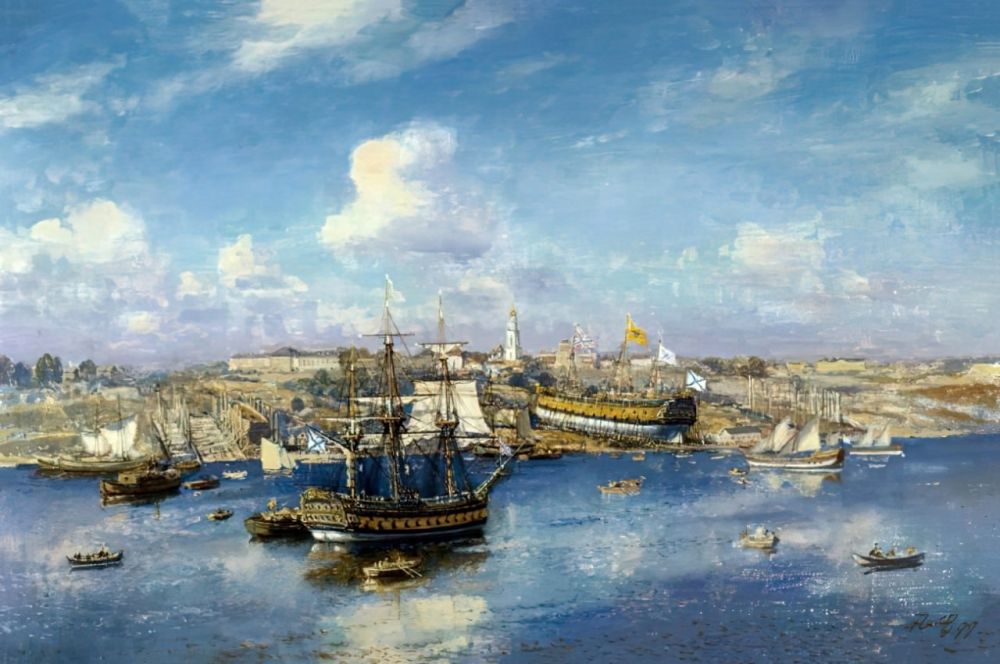
Kherson was founded in the late eighteenth century as a fortress, port, admiralty, and administrative center on the lower Dnipro. The fortress was laid in 1778 and developed as a major earthwork fortification, with artillery placed on its bastions and administrative and production buildings inside the fortified complex. The sea port was founded the same year, and in 1783 the fairway from the port to the sea was completed.

This setting matters for the family record. A soldier in Kherson in the early nineteenth century belonged to a city whose identity was still tied to fortress service, port activity, and imperial administration. The 1824 birth record of Feodor Zaichyk, son of Pavel and Evdokiia, therefore places the family inside Kherson’s early service world rather than in an older village parish setting.

At the same time, the city’s institutions were expanding. In 1813, Kherson established a public district primary school. In 1818, Denis Davydov founded a school for soldiers’ children in Kherson while serving as chief of staff of the 7th Infantry Corps of the 2nd Army quartered in the city. That educational setting gives family tradition about the sons of soldiers a plausible local context, even where the intervening generations are not fully preserved in the current record set.

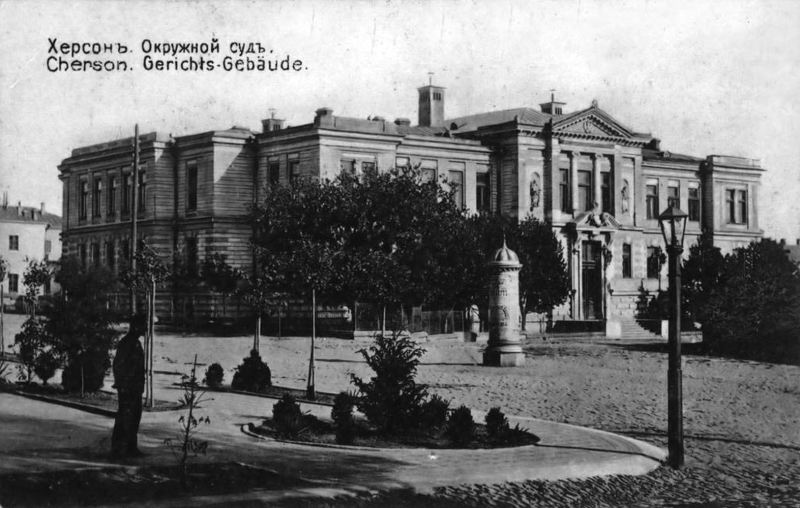
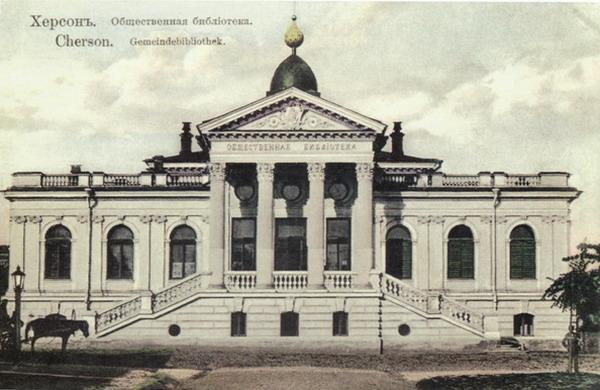
By the late nineteenth century, Kherson had developed the civic institutions visible in Sysoi Zaichyk’s records: courts, attorneys, city administration, an elected duma, public associations, a public library, newspapers, schools, and cultural organizations. The Kherson branch therefore preserves a distinctive kind of surname evidence: a movement from military-town records into the professional and civic institutions of a southern imperial city.
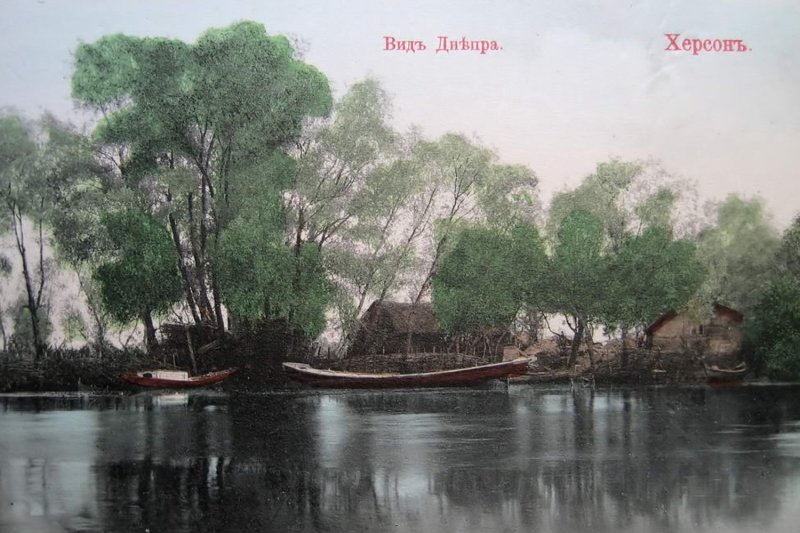
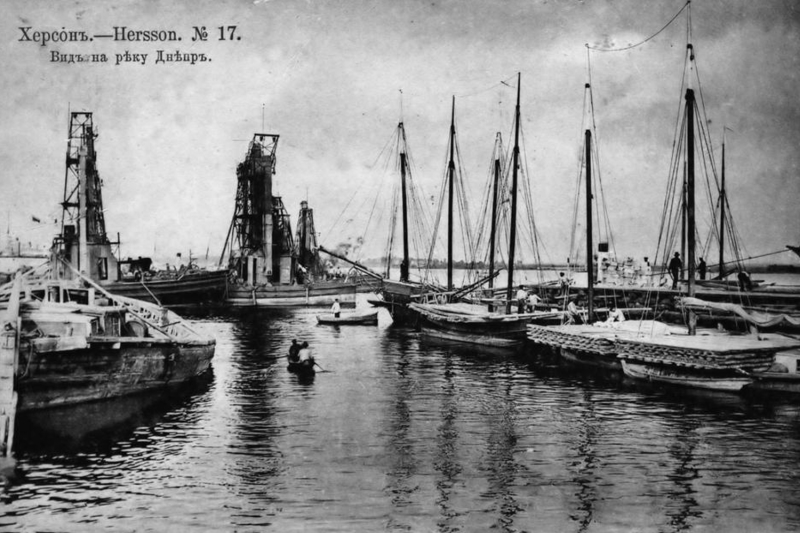
Postcard view of the Dnipro River at Kherson.
Postcard view of the Dnipro at Kherson, evoking the river setting of the city and its maritime world.
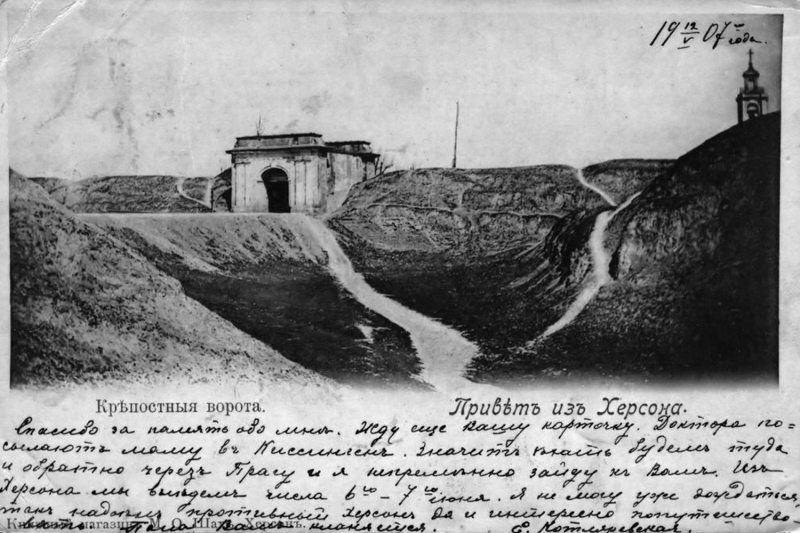
Postcard view of the Kherson fortress gate.
Postcard view of the Kherson fortress gate, representing the fortified military setting connected to the 1824 cannoneer record.
Postcard view of Kherson’s port and river traffic.
Postcard view of Kherson’s port and river traffic, part of the maritime economy surrounding the city.

Kherson and the Grain Export Trade

Kherson’s port connected the lower Dnipro to the wider Black Sea commercial world.

By the nineteenth century, Kherson was not only a fortress and administrative city. Its position on the lower Dnipro also tied it to the grain-export economy of southern Ukraine. Grain moved from the agricultural hinterland toward river landings, warehouses, carts, barges, steamships, and Black Sea export routes.

This commercial setting helps explain the city’s broader civic world. Courts, municipal administration, port labor, merchants, schools, newspapers, libraries, and professional associations all developed around a city whose public life was connected to shipping traffic and export trade.

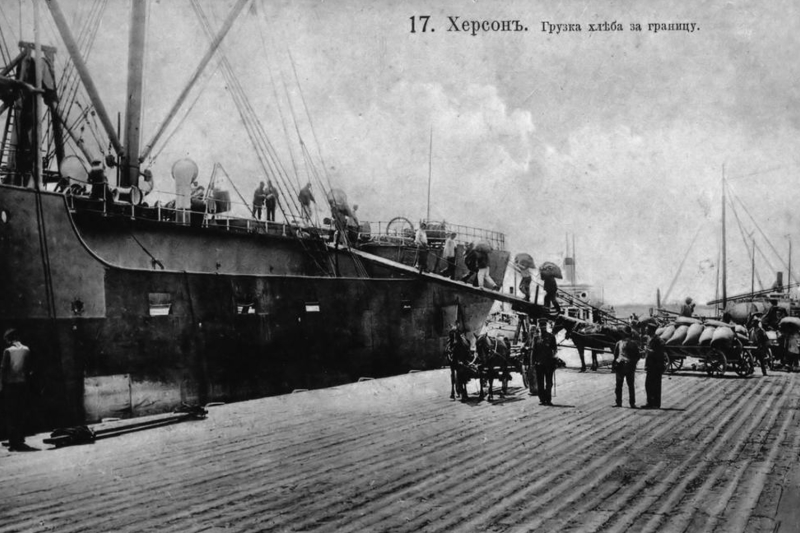
Postcard view of grain being loaded at Kherson’s docks for export.
Postcard view of grain being loaded for export at Kherson’s docks, showing the city’s role in the lower Dnipro and Black Sea grain trade.

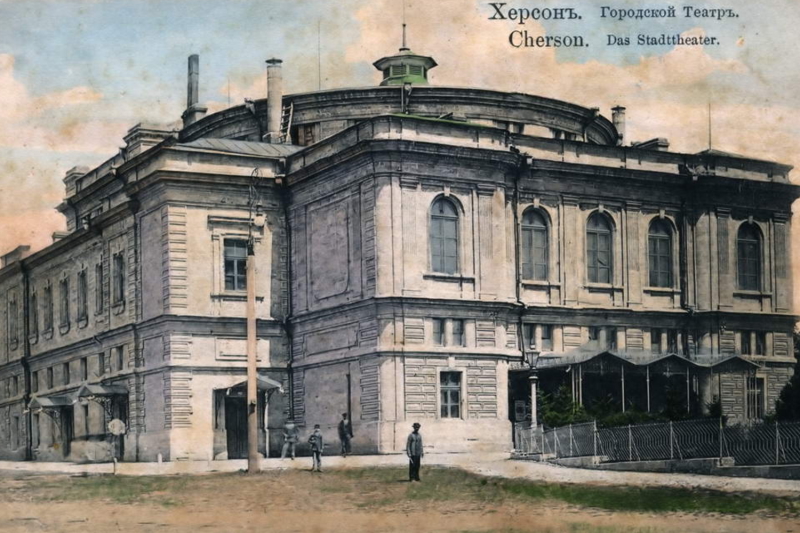
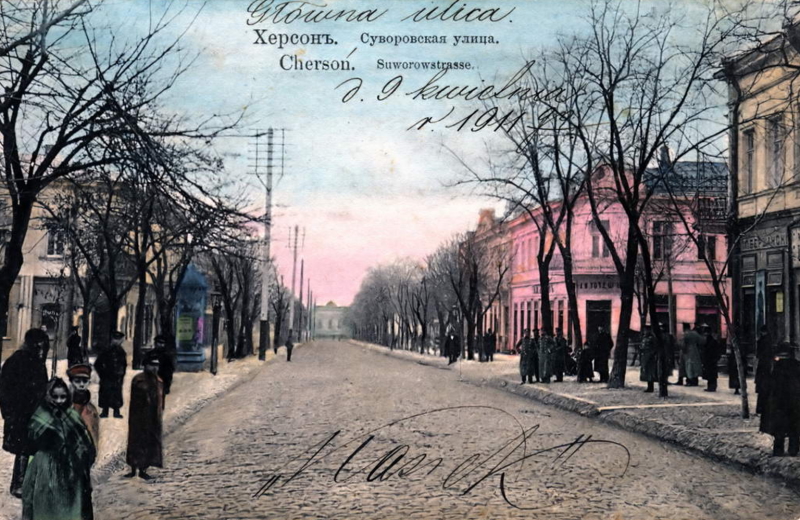
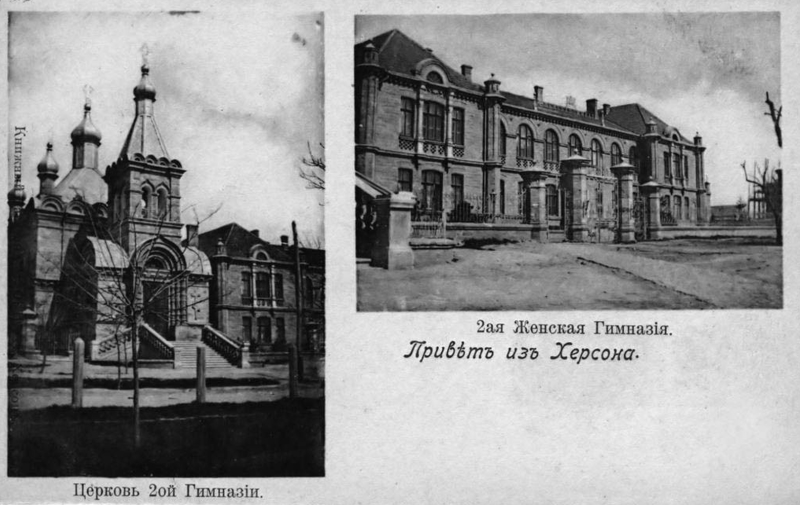
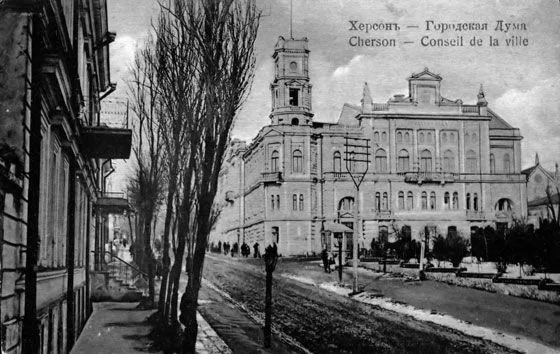
Historical Views of Kherson

Military, maritime, educational, commercial, and civic settings connected to the Kherson branch.

Documented Timeline

The known Kherson evidence begins with an early military-town record and continues into late imperial civic life.

1824

Feodor Zaichyk

A Kherson birth record identifies Feodor Zaichyk as the son of Pavel Zaichyk and Evdokiia. Pavel is recorded as a cannoneer, placing the family in the city’s early military and fortress environment.

1880s–1890s

Library leadership

Sysoi Karpovych Zaichyk appears repeatedly in the Kherson public library directorate, including years in which he signed annual reports and held financial responsibility.

1901

Legal and municipal roles

The 1901 Pamiatnaia Knizhka records Sysoi as attorney for the Kherson City Administration, member of the City Duma, and sworn attorney.

The Earliest Kherson Record

The 1824 record places the family in Kherson’s fortress and miltary world.

1824 · Kherson · birth / parish record

Feodor Zaichyk, son of Pavel and Evdokiia

The earliest identified Kherson-family record is the 1824 birth entry for Feodor Zaichyk. The entry records Feodor as the son of Pavel Zaichyk and Evdokiia. Pavel is described in a military context as a cannoneer, placing the family within Kherson’s early military-town environment.

1824 Kherson birth record for Feodor Zaichyk, son of Pavel and Evdokiia
1824 Kherson birth record for Feodor Zaichyk, son of Pavel and Evdokiia.

Record details

Record type: birth / parish record
Date: 16 February 1824
Place: Kherson
Child: Feodor Zaichyk
Parents: Pavel Zaichyk and Evdokiia
Status/context: Pavel is recorded as a cannoneer

Later nineteenth-century records preserve another documented point in the Kherson branch, Sysoi Karpovych Zaichyk. His patronymic identifies his father as Karpo. The intervening generations between Pavel and Feodor in 1824 and Sysoi Karpovych in the late nineteenth century remain only partially preserved in the current record set.

Sysoi Karpovych Zaichyk in Civic Kherson

Late nineteenth-century records place Sysoi Zaichyk in the legal, municipal, and cultural institutions of the city.

1880s–1901 · Kherson

Lawyer, city duma member, and public-library director

Sysoi Karpovych Zaichyk appears in late nineteenth- and early twentieth-century Kherson sources as a member of the city’s educated civic and professional class. The 1901 Pamiatnaia Knizhka records him in three public roles: attorney for the affairs of the Kherson City Administration, member of the Kherson City Duma, and sworn attorney.

Municipal legal role

Attorney for the City Administration

Listed as Поверенный по делам Городской Управы, Sysoi Zaichyk acted as attorney or legal representative for the Kherson City Administration.

This places him in a formal relationship with the municipal government, representing or handling the city administration’s legal affairs.

Elected municipal role

City Duma Member

Listed among the гласные, he served as one of the voting members or deputies of the Kherson City Duma.

The duma was the city’s elected municipal body, responsible for local civic affairs such as budgets, schools, public institutions, taxation, and urban services.

Professional legal status

Sworn Attorney

Listed among the присяжные поверенные, he belonged to the formally recognized legal profession of the reformed imperial court system.

This title was more specific than ordinary “attorney” or “representative”; it marked an admitted advocate with recognized court standing.

These records place him not merely as a resident of Kherson, but as a participant in the city’s public institutions: legal representation, municipal administration, elected civic government, and associational cultural life.

Public library leadership

The chronicle of the Kherson public library records Зайчик С.К. as a recurring member of the library directorate from the mid-1880s into the early 1890s. He appears in the directorate in 1885, 1886, 1887, 1888, 1890, 1891, and 1892, and his name appears among the directors who signed several annual reports.

The 1891 entry gives a specific responsibility: Зайчик С.К. завідував капіталом і зберігав грошові документи — Sysoi Zaichyk managed the capital and kept the monetary documents. This places him within the library’s financial and administrative leadership, not merely among nominal supporters.

The library was a major civic institution in late imperial Kherson. Public libraries often functioned as centers of urban reading culture and civic self-organization, especially for educated professionals, teachers, officials, lawyers, and other members of the local intelligentsia. During the years in which Zaichyk served on the directorate, the chronicle records work on cataloging, building plans, fundraising, public access, subscriptions, reading statistics, preservation of the collection, and management of a growing public institution.

Selected library appearances

1885

Directorate member

Зайчик С.К. appears in the library directorate. The annual report was signed by several directors, including Zaichyk. The library recorded 84 members, 341 open days, 671 ticketed readers, 9,426 reading-room visits, 7,076 journals issued, and 20,224 books issued.

1886

Directorate member

Зайчик С.К. again appears among the members of the library directorate.

1887

Elected director

General members elected eight directors, including Зайчик С.К. His name also appears among the directors who signed the annual report.

1888

Elected director

Зайчик С.К. appears among the directors elected after the library expanded the directorate.

1890

Directorate member and report signer

Зайчик С.К. appears in the elected directorate and among the directors who signed the report for the year.

1891

Financial responsibility

The chronicle records that Зайчик С.К. managed the capital and kept the monetary documents for the library.

1892

Directorate member

He appears again in the library directorate, with duties distributed as in the previous year.

What Is Documented and What Is Remembered

The Kherson page distinguishes between archival records and family tradition.

The firm evidence currently consists of several documented points. In 1824, Feodor Zaichyk is recorded in Kherson as the son of Pavel and Evdokiia, with Pavel described as a cannoneer. In the late nineteenth century, Sysoi Karpovych Zaichyk appears in Kherson’s legal, municipal, and library records. In 1901, he is listed as attorney for the City Administration, City Duma member, and sworn attorney. From the 1880s through 1900, he appears repeatedly in the chronicle of the Kherson public library.

Family tradition supplies the connective memory between these documented points. It holds that education for the sons of soldiers played a role in the family’s rise in Kherson, and that descendants advanced through maritime trades and into urban professional life. This tradition aligns with the city’s documented institutional setting, including the 1818 school for soldiers’ children and Kherson’s military and maritime character.

The available records do not yet preserve every intervening generation between Pavel, Feodor, Karpo, and Sysoi. For that reason, this page presents family tradition as part of the Kherson branch’s historical memory, while keeping the confirmed records identified separately.